%20(1).png)
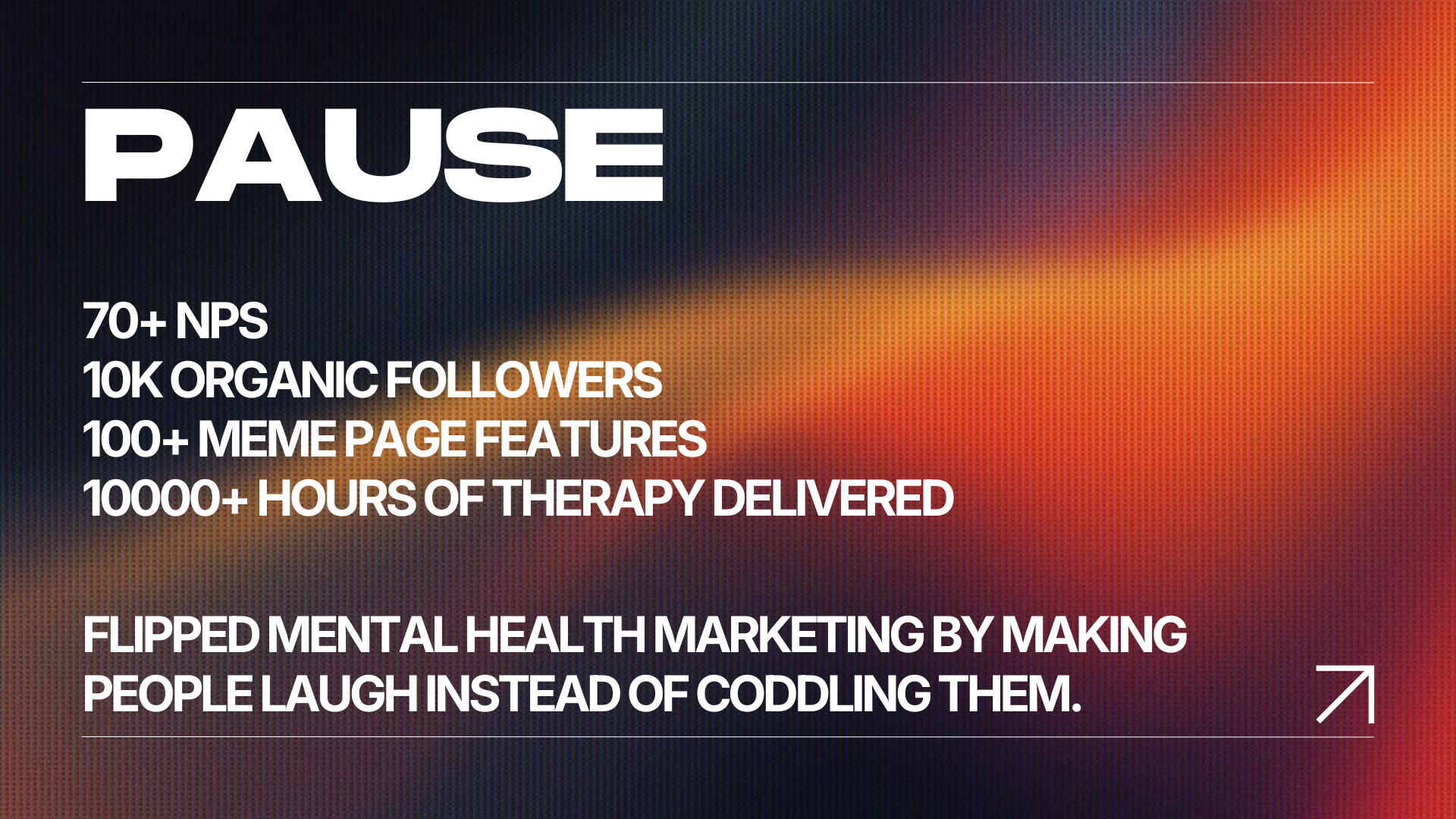

Mental health came with stigma. Everyone saw it, but no one spoke about it openly. People suffering didn't speak up because they didn’t want to be seen as broken. And the brands weren't helping; they absorbed the stigma into their marketing with soft gradients, careful language & hushed tones. The unspoken message was: this is delicate, let's not make noise about it. But tip-toeing around the subject doesn't reduce stigma, it reinforces it. The entire category looked the same: everyone competing to be the most soothing, the most careful, the most safe. And in doing so, participating in the same silence they claimed to be breaking.

Dark humour is how a lot of people actually cope. It's the language of group chats, waiting rooms, and meme pages. Because if you can laugh about the thing you're ashamed of, it says something no amount of gentle validation can: you're not broken, you're just human. We realised relatability beat reassurance & if we could make people feel less alone in their pain by saying it out loud, we'd do more to fight stigma than another "you matter" post ever could.
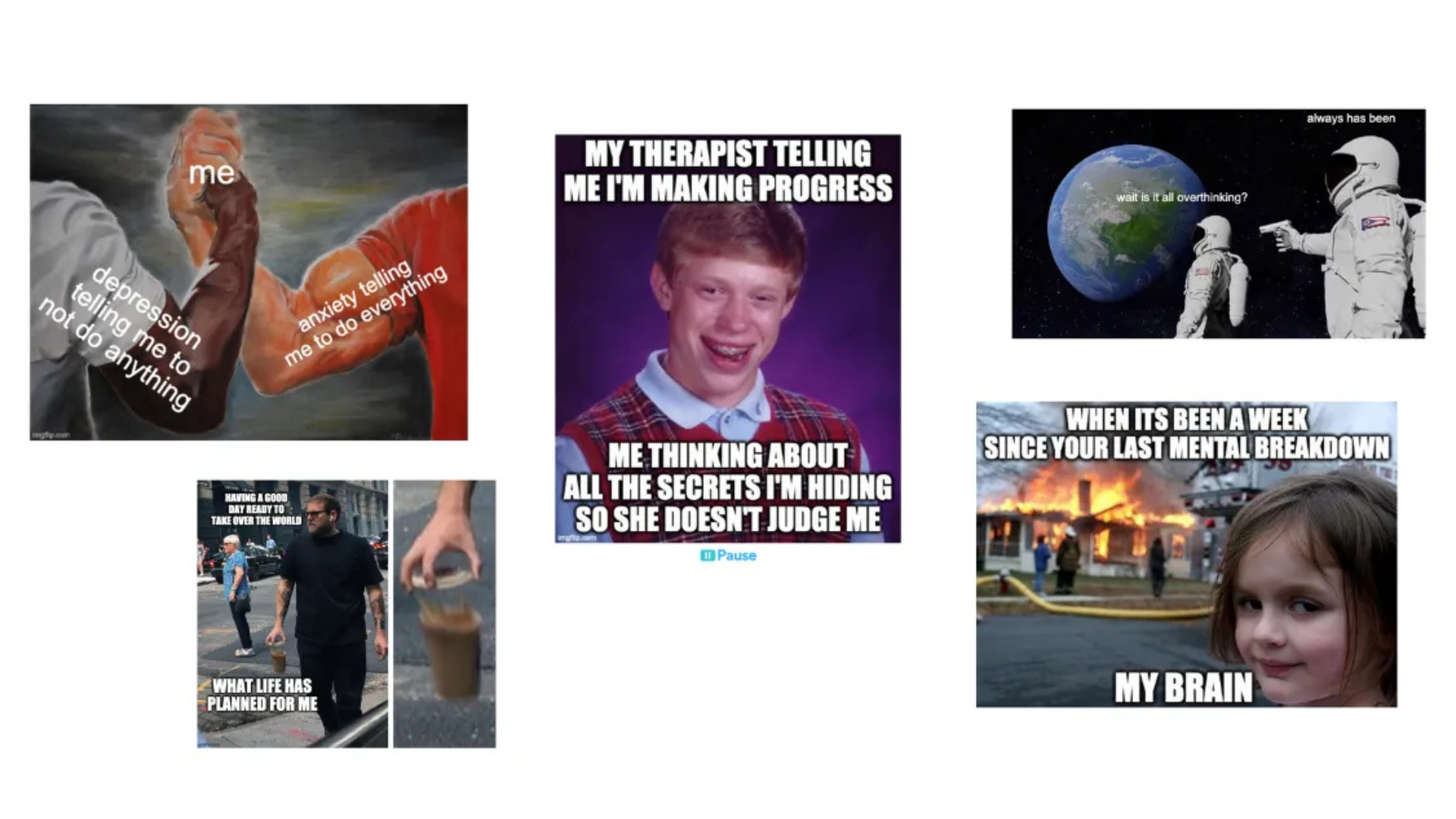

When an entire category competes to be the softest voice in the room, the most human thing we can do is stop whispering.

live
laugh
launch
Live
Laugh
.svg)